 Client Login
  Retirement assessment
  Book a call
  0117 990 2602



Quick Answer: The right time for a business owner to sell depends on whether the sale would make them financially independent. Selling earlier can leave you short of income later. Selling later can cost years of freedom, family time and opportunities. The most successful exits start by understanding how much money you actually need, not how much your business is worth.
You’ve spent years building an empire, navigating the obstacles of the business world: tax rises that eat into your hard-won gains, inflation that slowly decreases your purchasing power, and volatile markets that seem designed to test your nerves. You’ve build something valuable despite all of that. Now, the final boss stands before you: a decision that could give you your freedom, or keep you chained to the very thing you built.
David is 58, and he owns a manufacturing business that he has spent most of his working life building. He started small, reinvested almost everything, and grew it steadily over decades into something genuinely valuable.
Five years ago, he decided he would sell when it reached £3 million. Today, it’s worth more than that. Buyers have been in touch. The business is running well.
And David is still working six days a week.
The problem is not the valuation. The trouble is he doesn’t know what comes next, so stopping feels riskier than carrying on. He knows exactly what his business is worth. But has no idea whether selling it would give him enough to never work again, and because he has never worked that out, he keeps doing the one thing he is sure of: going back to work.
David’s not an anomaly. Many owners spend years trying to increase the value of the business without ever working out what they want the sale to achieve. And it has a cost. Research from the Exit Planning Institute suggests that around 75% of business owners regret selling within a year of the deal. Often, that regret is less about the price and more about not knowing what “enough” looked like before they sold. (Source: Exit Planning Institute, State of Owner Readiness Report).
If you are thinking about selling in the next few years, this is worth reading before any buyer conversation begins. This is exactly the kind of decision we help business owners model before they sell, so the exit supports the life they actually want.

Why do business owners keep delaying an exit?
Almost no one decides to work five years longer than they meant to. It happens quietly, one reasonable year at a time, while the finish line keeps moving. Without a clear map of your future, the safest path is always the one you know: staying in the business.
What happens when you hit your target and it still doesn’t feel like enough?
The number that once felt life-changing quickly becomes the new baseline. When the business was worth £500,000, a £1 million sale felt transformational. Once it reached £1 million, £2 million started to feel within reach. The target keeps moving as goalposts change.
This is exactly what happened to David. He set £3 million as his number because, five years ago, it sounded like more than enough. He reached it. He should have felt settled. Instead, the closer he got, the less certain that figure felt.
Some of that was real life intruding on a plan made years earlier. The weekly shop had crept up more than he expected. A holiday he’d priced out two years ago now cost noticeably more when he actually went to book it. His children, once teenagers at home, were now adults with their own lives, and the quiet thought of helping with a deposit or a wedding had started creeping into his calculations. The news cycle didn’t help either, with talk of market volatility and economic uncertainty making £3 million feel less solid than it had when he first picked the number.
None of this means David became greedy or kept moving the goalposts for the sake of it. It means the number was never built on anything solid in the first place. It was a guess that felt right five years ago, and guesses don’t hold up well against real life. The actual problem wasn’t the size of the number. It was that nobody had ever properly worked out what the number needed to be, or what David was going to do with his time once he reached it.
Why “just one more year” is rarely about the money
Business owners tend to be optimists. It’s often why the business succeeded in the first place. But ask most owners why they’re staying another year, and underneath the business reasons, the honest answer is usually that they haven’t worked out what they’d actually do if they sold, or whether what they’d walk away with is genuinely enough:
- Growth forecasts tend to assume favourable conditions that may not hold.
- The right buyer may not be there when you finally decide you are ready.
- Market conditions can turn quickly, and an exit window can close.
So the extra year you grant yourself is rarely just a year. Time rarely feels valuable until it’s gone.
When does more money stop changing your life?
There is a difference between being wealthy and being financially independent. Being wealthy means having a lot of money. Being financially independent means having enough that you no longer need to work to fund the life you want. They sound similar, and the gap between them is where a lot of owners lose years.
Beyond a certain point, more money stops buying a better life.
- A larger valuation does not automatically create a better life.
- Additional wealth often delivers diminishing lifestyle benefits.
- More money only matters if it improves future choices.
That sounds obvious. It only matters if it genuinely improves your choices, yet many owners continue chasing a larger number long after they have enough.
If you are planning to sell your business and retire, our guide to how much you need to retire is a useful companion to this one.

What happens if you sell your business too early?
Selling too late gets most of the attention, but selling too soon creates its own problems, and they are harder to undo. Once the business is gone, you cannot go back for a higher price. This can catch owners out years later. You may come to realise you underestimated your number, or your circumstances simply changed in ways you couldn’t have predicted. Either way, you can’t go back to the table and renegotiate, and by then you may not have the energy or appetite to start again even if you could. The result is a stretch of later life spent without the financial security that flexibility requires, at exactly the point when flexibility matters most.
What are the risks of selling your business too early?
A sale can look enormous on the day and still fall short of funding the rest of your life. A £2 million cheque sounds like plenty until you start listing what it actually has to cover: tax on the way out, inflation chipping away at its value for thirty years or more, three or four decades of ordinary living costs, the children’s weddings and house deposits that tend to arrive whether you’ve planned for them or not, the financial reshuffling that comes with any major change in family circumstances, and the cost of ill health later in life, which has a habit of arriving uninvited. What matters is not the size of the cheque but how much it can reliably produce, year after year, against all of that.
Surprisingly, spending often goes up in the first few years after a sale. After decades of working flat out, people finally have the time to travel, take on projects and do the things they put off, and that costs money. A sale planned around your old, busy-life spending can quietly come up short against the life you actually want to live. And there’s a less glamorous take: every business expense that used to be deductible, the car, the phone, the odd client lunch, now comes out of your own pocket once there’s no business to claim it through. A sale planned around your old, busy-life spending, and your old, business-subsidised spending, can come up short against the life you actually want to live.
Why does financial security create freedom?
Financial security creates options. Without enough of it, the choices start to narrow in ways that feel uncomfortably familiar:
- The bit of consulting or part-time work that was meant to be optional starts to feel necessary.
- Investment decisions get driven by pressure rather than patience, which rarely ends well.
- The lifestyle you pictured quietly gets trimmed to fit what the proceeds can actually support.
Most owners sell hoping for freedom, but whether they get it depends on good planning.
Why is the valuation only part of the picture?
Two businesses can sell for exactly the same amount and create completely different places.
- One owner may have pensions, ISAs and property outside the business.
- The other has poured everything back into the company, and the sale is almost everything they have.
This is the norm rather than the exception: the Exit Planning Institute estimates that around 70 to 80% of a typical owner’s wealth is tied up in their business (Source: Exit Planning Institute). One business owner’s anxiety is another business owner’s comfort. The sale price matters. What it has to achieve matters more.
There is also the tax question to weigh, since what you keep is not the same as what you sell for. Our piece on how business owners can reduce tax when selling their company covers that side in detail.
What happens if you sell your business too late?
Many owners assume waiting is the safe option. David certainly did. The truth is that waiting carries a cost too, one that never shows up on a spreadsheet.
What is the hidden cost of waiting to sell?
Every extra year in the business comes with tradeoffs. You gain a bit more value, and you spend something you cannot replace. Money compounds. Life doesn’t. You risk what you need for something you don’t.
David is living this very reality. When he first set his £3 million target, his children were teenagers still at home, and he pictured long family holidays once he sold. Now, they’re adults, with jobs and lives of their own, and those special years are simply gone. The valuation went up. Some of the things he was selling for disappeared while he waited.
Does your health really affect the decision?
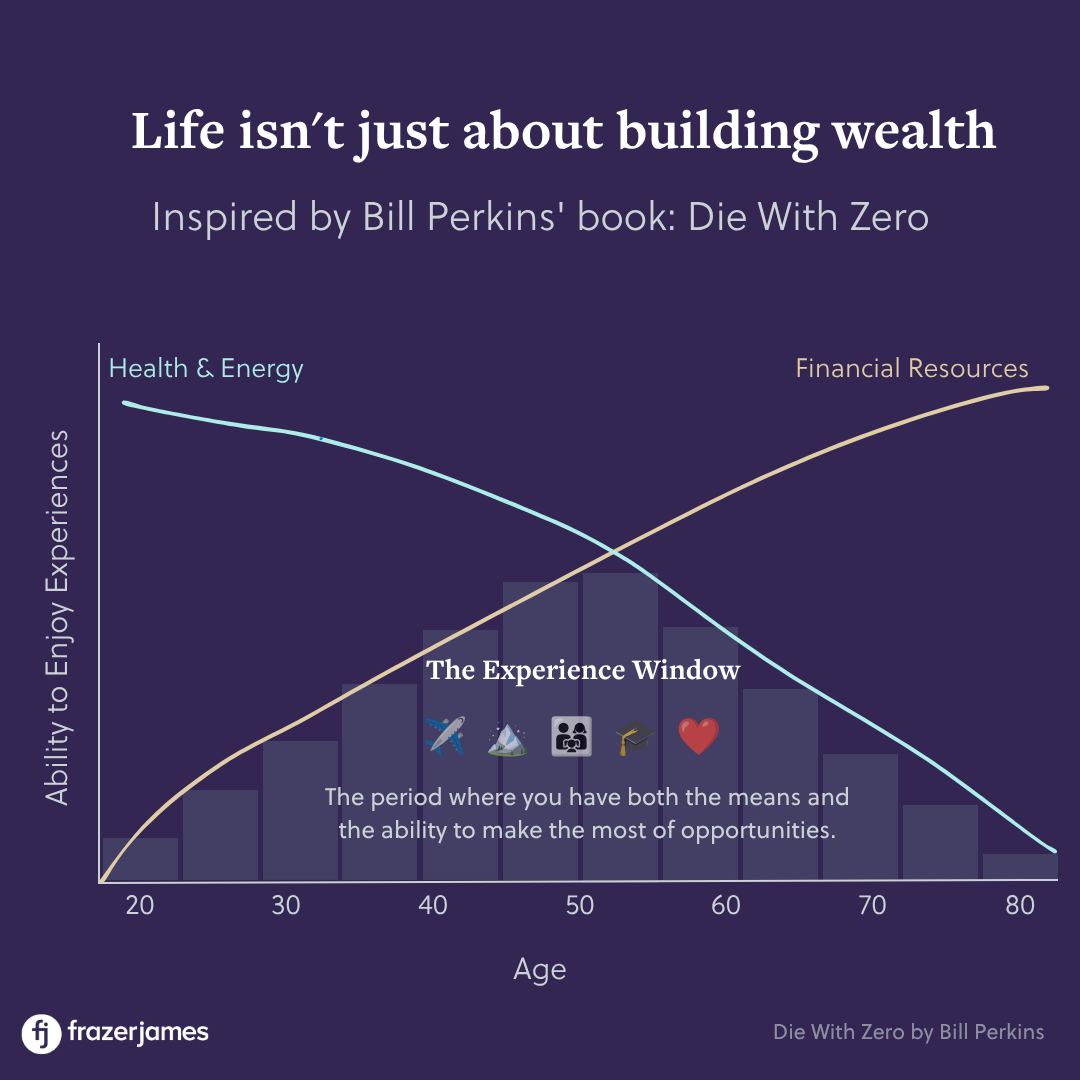
Money, energy and health rarely peak at the same time. In your fifties you may have the health and stamina to do almost anything, but feel you haven’t quite got the money. By your seventies you may finally feel you have enough money, but lack the energy or health to use it the way you once pictured. The freedom you buy at 65 is not the same as the freedom you could have had at 55:
- Energy levels change, and the things you planned can become less appealing or harder to do.
- The trips, the sport, the hands-on projects all assume a level of health that isn’t guaranteed.
- Stress takes a heavier toll, and recovery from it takes longer, as the years go on.
None of this means rushing into a sale. It means being honest about a trade-off most owners never name: the years that are best for enjoying an exit are rarely the same years that are best for maximising one. Waiting costs something, even when the valuation rises.
Why do some owners struggle to let go?
Because selling a business is rarely just a financial decision. After decades at the helm, the business often becomes part of who you are, and that’s the hardest thing to sell:
- Status gets tied up in being the person who owns and runs the company.
- The working day provides structure, and what replaces it can feel existential.
- Purpose and identity can suddenly feel uncertain once the company is gone.
This is the part the research keeps pointing to. When owners regret selling, it’s not usually about the deal itself. Research from Yale School of Management found that only 20% of post-exit entrepreneurs had planned for life after the sale, and just 22% found that life matched their expectations once they got there. (Source: Yale School of Management). Most had spent months preparing the business for sale and almost no time preparing themselves for what came next.

How much do you actually need to sell your business for?
Almost every owner starts here. It’s the wrong place to start. You cannot know what you need to sell for until you know two things first: what your life after the business actually costs, and what you already have to fund it. Get those right and the number you need from the sale may be a pleasant surprise.
What does life after business actually look like?
Most owners know what they want from the business. Far fewer know what they want from life after it. That gap is where regret starts. It’s worth sitting with the real questions before numbers come into it:
- What does an ideal week look like after an exit?
- How much annual income would feel comfortable?
- How will time be spent?
- What experiences matter most?
- What are you working towards?
When David was finally asked these questions, his answer surprised him. He didn’t want to stop working entirely. He wanted to work differently, on things he chose, with people he liked, without payroll and worry on his shoulders. Had he realised that two years ago, he would have seen that he could already afford to make the change. It would have given him an extra two years back with his family, which were years when his children both left home.
What is your financial independence number, and how do you work it out?
Your financial independence number is simply the amount you need invested to support your lifestyle without relying on earned income. It’s a specific number, not a vague aspiration, and most business owners have never worked theirs out.
It’s built from three things:
- The annual income you need to live the way you want to live
- The assets you already hold outside the business: pensions, ISAs, property, savings
- The gap between the two that the sale proceeds need to fill
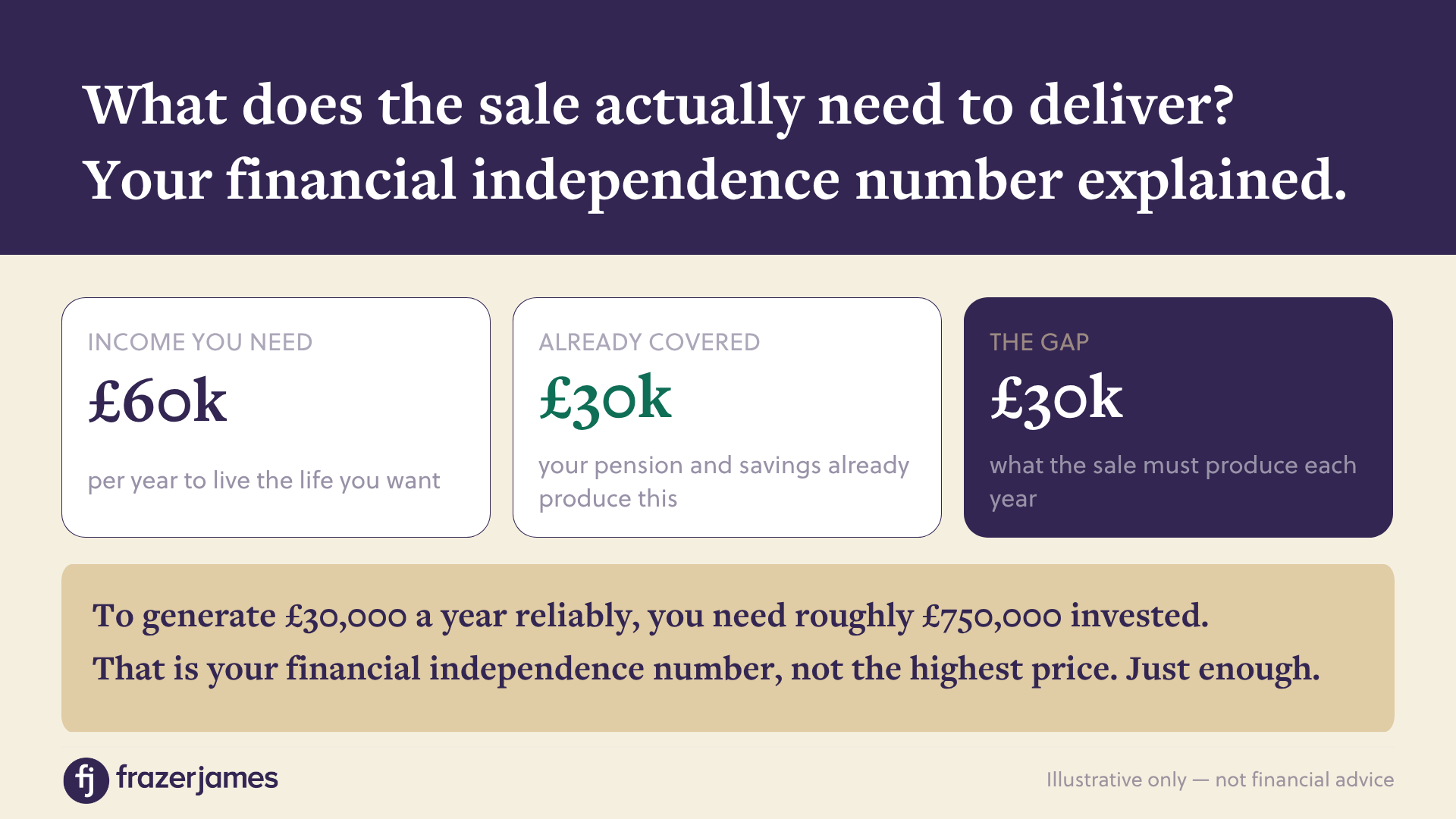
Here’s what that looks like in plain terms. Say you need £60,000 a year to live comfortably, and your pension and other savings can reliably produce £30,000 of that. The sale then has to generate the other £30,000 a year, for the rest of your life, without running dry. That’s a far more useful question than “what is the most I can sell for?”. It turns guesses into plans, and it’s the heart of how we work with business owners.
If you would rather start with a quick sense of where you stand, our retirement assessment is a simple first step.
Why can a £1 million exit beat a £5 million one?
Because “enough money” is personal. A £1 million sale might comfortably fund one owner’s whole retirement. A £5 million sale might still leave another feeling exposed, because their outgoings, their plans or their lack of other savings demand more. Comparing your exit to someone else’s is close to meaningless. The right figure depends on your life, not theirs, and the only comparison that counts is between the sale and your own number.
Most owners have never put a real figure to this. We do it with them in a single conversation, and it often changes how they think about the whole exit. Work out your number with Frazer James.
How do you know you are actually ready to sell?
There is no perfect moment, but there are clear signals. Notice that not one of them is about the valuation:
- You know how much income you want after the sale.
- You understand your full financial position, inside and outside the business.
- The sale, combined with your other assets, would support the life you want.
- Work has become something you choose to do, not something you have to do.
- Another year in the business is unlikely to make a meaningful difference to your future.
If most of those are true, you are likely readier than you feel. If a few of them are, that is not a reason to keep grinding indefinitely. It is a reason to do the planning that would let you answer them, ideally well before a buyer forces the question.
The questions to ask before you sell
| The usual question | The better question |
| What is my business worth? | How much do I need to sell to hit my number? |
| How do I get a higher valuation? | Would a higher valuation actually improve my life? |
| Should I wait another year? | What would that extra year cost me? |
| Can I sell now? | Have I reached financial independence? |
| What is the best exit? | Which option gives me the most freedom? |
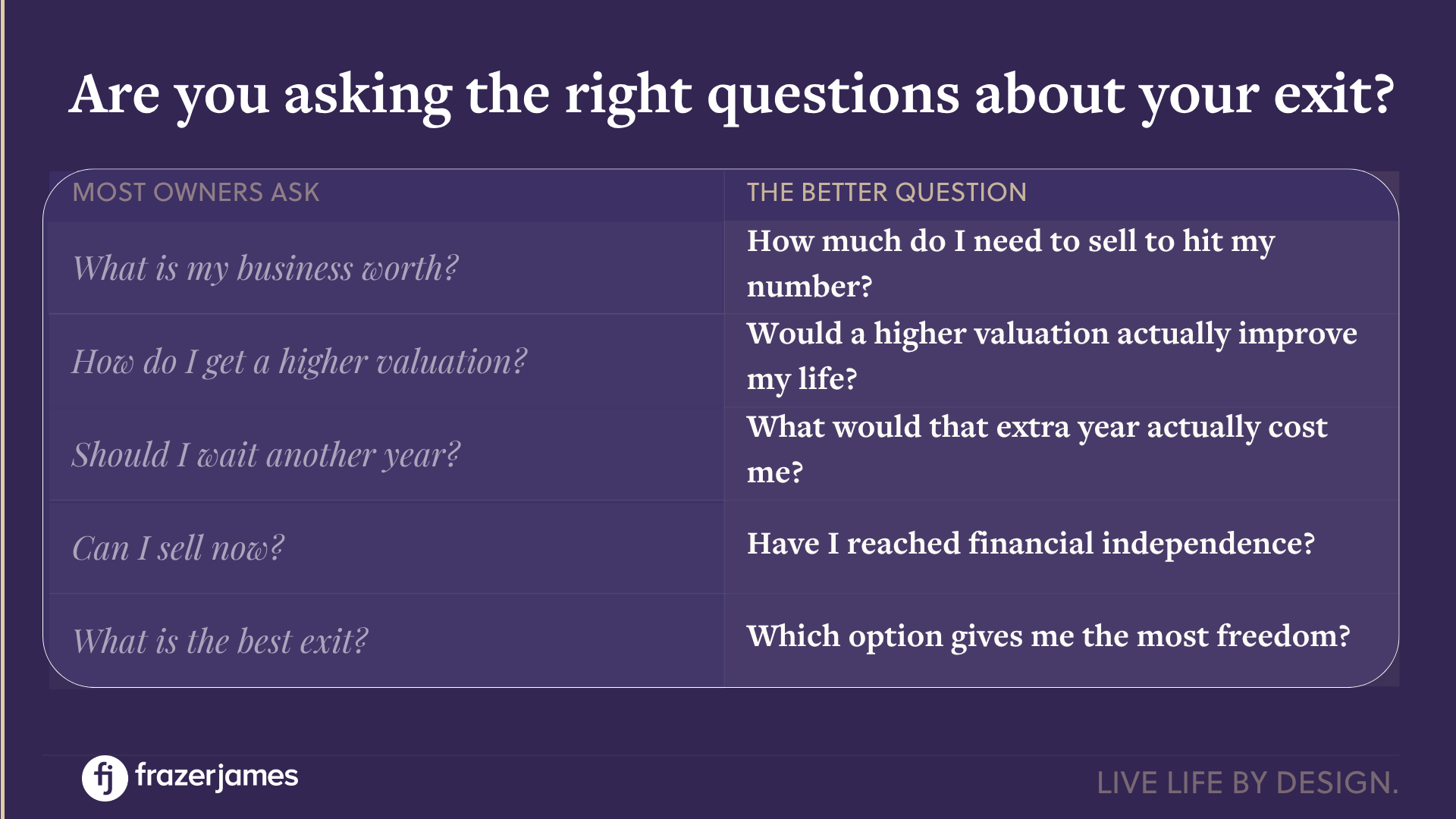
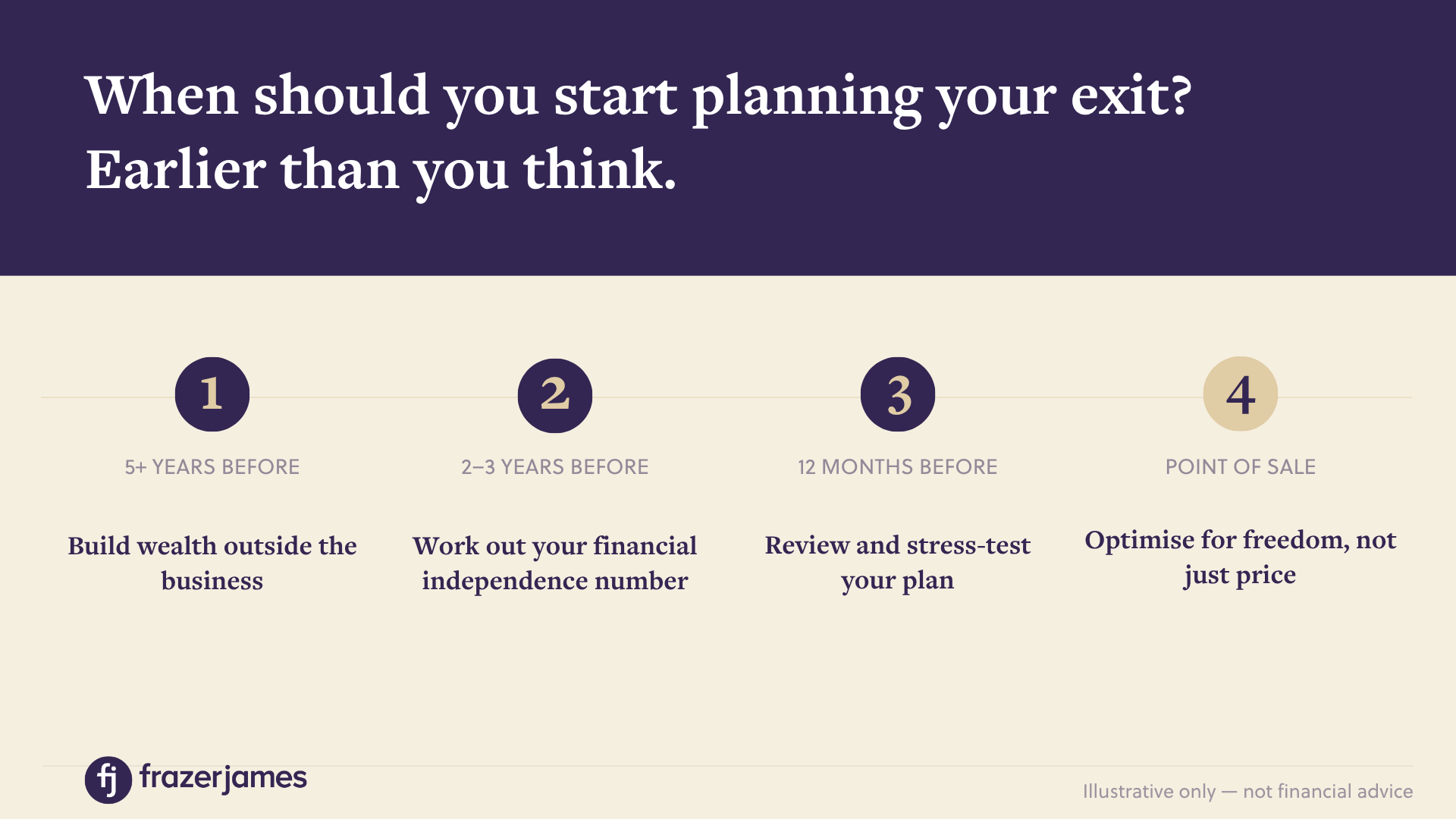
And once you can answer them, the final shift is the hardest: accepting that the highest price is not automatically the best outcome. A clean, simpler sale that gets you to your number can be worth far more than a bigger one that ties you in for years. Every extra year has a cost, more money does not reliably buy more freedom, and the best exit is usually the one that leaves you with the most choice. Financial independence was never about having the most money. It is about having enough, and recognising the moment you do.
For a closer look at the practical mistakes that cost owners on the way out, our companion piece on the £100k mistake business owners make when exiting picks up where this one leaves off.

Key takeaways
- Know your number. Most owners know their business valuation. Very few know their financial independence number, the amount they need invested to live without working. That number, not the valuation, should drive the timing.
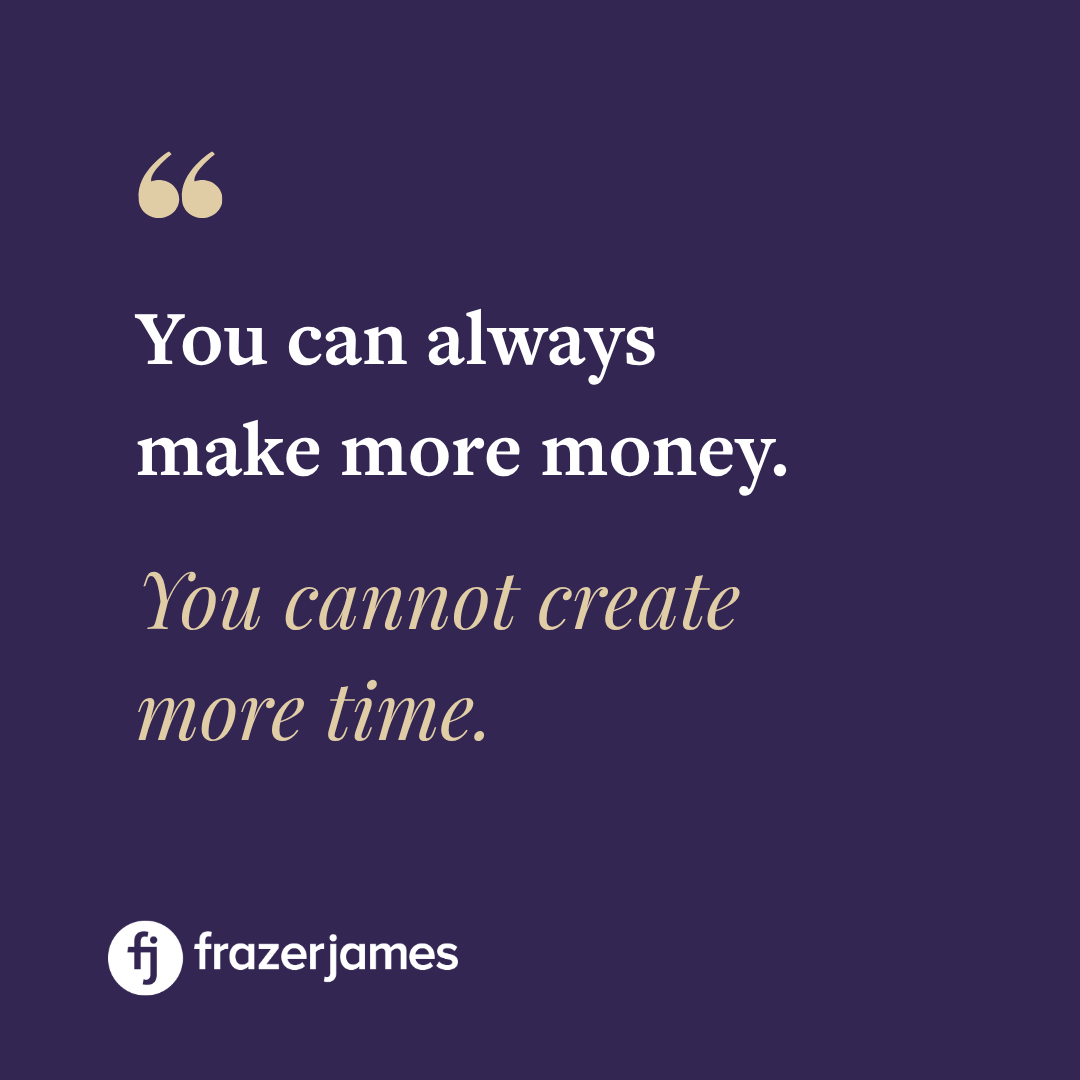
- Time has value that money cannot replace. An extra £500,000 may matter far less than five more years of health and freedom. You can always make more money. You cannot make more time.
- The valuation is only part of the story. Two owners can sell for the same price and end up worlds apart, depending on what they already hold outside the business.
- Identity keeps owners stuck more often than money does. Around 75% of owners regret selling within a year, mostly because they never planned for life afterwards, not because of the price (Source: Exit Planning Institute).
- Optimise for choice, not for the highest figure. The best exits are measured in freedom, and knowing when you have enough may be the most valuable part of the whole plan.
Talk to Frazer James
The best exit decisions start with clarity about what you actually need, not with what a buyer is prepared to offer. We help business owners work out their number, plan the timing, and join up the business with the personal picture, so the sale buys the life you want at the right moment.
We work with business owners across Bristol and the rest of the UK who are thinking seriously about what comes next, whether that is in six months or six years.
Book an initial consultation or call us on 0117 990 2602.
This article is for general information purposes only and does not constitute financial or tax advice. Tax rules and their application depend on individual circumstances. The pension inheritance tax changes described reflect legislation current at the time of writing. Independent professional advice should be sought before acting on anything in this article. Frazer James Financial Advisers is authorised and regulated by the Financial Conduct Authority.