 Client Login
  Retirement assessment
  Book a call
  0117 990 2602


Modified on: August 2026
Maximising Retirement Wealth – A Guide for Business Owners

Maximising Retirement Wealth – A Guide for Business Owners
For business owners in the UK, planning for retirement comes with unique challenges and opportunities. Transitioning from managing a business to enjoying a secure and fulfilling retirement requires thoughtful preparation. This guide outlines strategies to maximise your retirement wealth while addressing the complexities of business ownership.
The Unique Financial Landscape of Business Owners
Every business is different. So, it is no surprise that every business owner’s financial landscape is different. It comes with a unique set of challenges and opportunities. Here are a few:
Fluctuating Income Streams
- Challenge: Business owners often rely heavily on their business for income, leading to significant income fluctuations. The good years are often followed by bad years, and vice versa. This dependency on the business’s success can create uncertainty, especially as retirement approaches.
- Solution: To address this challenge, consider diversifying your income sources. While your business equity is a substantial asset, it’s crucial not to put all your retirement eggs in one basket. Diversification can provide stability and mitigate the risk of fluctuating business income.
- Strategy: Spread your money widely between stocks, bonds and cash. Ensure your investments are diversified globally and between different asset classes, including stocks, bonds and cash. The performance of these investments and the income they generate are unlikely to be correlated to each other or your business, providing you with a more stable and reliable income stream.
Pension Planning Complexity
- Challenge: Business owners face a range of pension options, including Self-Invested Personal Pensions (SIPPs) and Small Self-Administered Schemes (SSASs). The challenge lies in selecting the right pension plan that aligns with your personal and business goals.
- Solution: To navigate this landscape effectively, choose a low-cost pension plan that allows you to divert surplus business profits into it. Employer pension contributions for business owners can offer significant tax benefits, as they are typically tax-deductible expenses for the business. This allows business owners to save for retirement and lower their tax liability simultaneously.
- Strategy: Once you have chosen a low-cost pension plan, regularly divert surplus business profits into the plan. This approach ensures efficient use of variable income and long-term retirement security.
Diverse Asset Portfolio
- Challenge: Business owners typically hold a diverse portfolio that spans stocks, real estate, business assets, etc. Managing this diversity can be intricate, and ensuring each asset contributes optimally to your financial security in retirement poses a unique challenge.
- Solution: The solution lies in crafting an investment strategy that embraces this investment diversification while aligning with your long-term financial objectives. This involves optimising the performance of each asset class to achieve a balanced and robust portfolio.
- Strategy: Periodic portfolio rebalancing should be a cornerstone of your strategy. Regularly assess and adjust your asset allocation to maintain the desired balance of risk and return. Professional investment management can streamline this process, ensuring that your diverse asset portfolio remains a powerful tool for securing your financial future.
Investing Surplus Cash
- Challenge: Managing surplus profits within your business while minimising the impact of corporation tax is a challenge many business owners face. The dilemma arises when you seek effective ways to allocate surplus funds within the company while optimising tax efficiency.
- Solution: One strategy to address this challenge is to consider corporate investments as a means to defer gains for corporation tax purposes. Corporate investments can be a valuable tool to grow wealth and manage tax liabilities.
- Strategy: To address the challenge of managing surplus profits while minimising corporation tax, consider using corporate investments as a tax-efficient solution. By strategically investing surplus funds in assets such as shares or bonds, you not only have the potential to generate additional income but can also benefit from more favourable tax rates on capital gains. This approach allows you to defer gains and delay the point at which they become taxable, enabling your capital to grow over time.
Strategic Tax Planning for Business Owners’ Retirement
As you begin retirement, your financial focus shifts from building wealth to managing it. Unless managed carefully, your single largest expense will be your tax bill. By structuring your income and assets tax efficiently, you can reduce how much you pay in tax and increase how much you receive in retirement.
- Income Tax: Craft withdrawal strategies to minimise your liabilities by optimising your usage of personal allowances and tax bands.
- Capital Gains Tax: If selling business assets, stagger sales over financial years to spread the tax burden.
- Inheritance Tax: Use trusts and other mechanisms to pass wealth to beneficiaries while reducing inheritance tax exposure. Explore our guide to inheritance tax planning to learn more about how to minimise your inheritance tax liability.
In summary, the intricacies of tax planning in retirement are multifaceted. They require a comprehensive understanding of tax laws and a keen eye on how they apply to your unique financial situation.
Succession Planning for Business Owners
Succession planning is vital for a smooth business transition. Consider these steps:
- Identify Successors: Whether passing the business to family, selling to employees, or finding external buyers, start early to identify the right successors.
- Establish Agreements: Draft legal agreements, including buy-sell or cross-option agreements, to formalise ownership transfer.
- Gradual Transition: Consider phased involvement to ensure successors are prepared and the business’s value remains intact.
- Advisory Role Post-Retirement: Retain a consulting or advisory role to provide guidance while transitioning into retirement, ensuring continuity and leveraging your expertise.
Strategic succession planning ensures your legacy endures and minimises disruption during ownership transitions.
Comprehensive Retirement Planning for Business Owners
Every aspect of your strategy should encapsulate every facet of your financial life – from pensions and investments to the proceeds from the potential sale of your business. The key is to create a holistic plan that reflects your current financial status and anticipates future needs and goals.
Central to this process is cash flow planning. By mapping out your expected income streams and expenditures over time, you can visualise the trajectory of your finances in retirement. This includes regular pension withdrawals, potential investment income, and lump-sum payments from selling business assets.
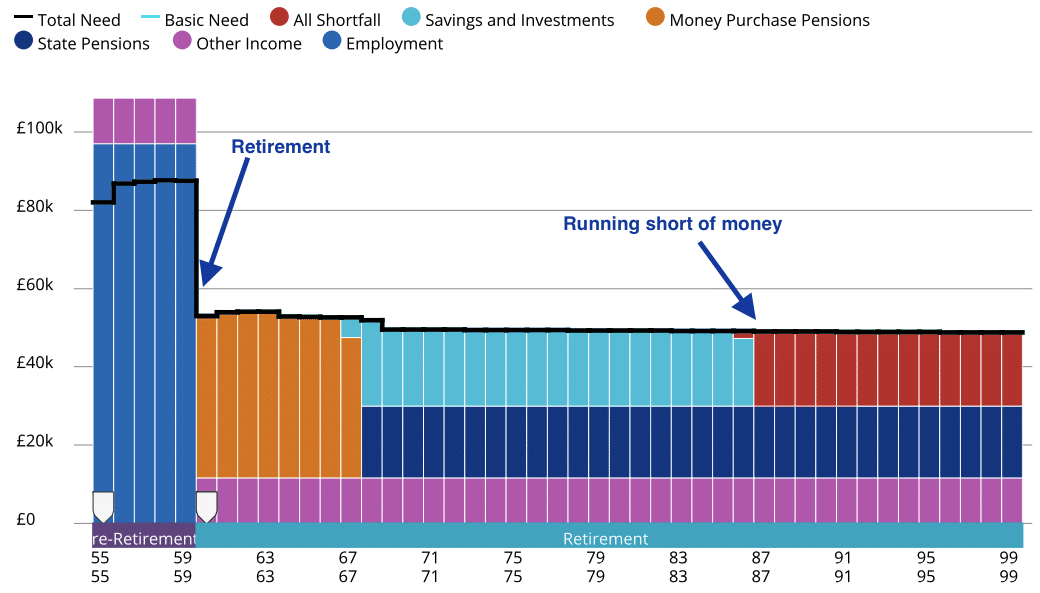
Cash flow planning offers a realistic view of your financial future, highlighting periods of surplus and potential shortfalls. It’s like a financial roadmap, guiding you through each retirement phase and helping you make informed decisions about spending, saving, and investing.
Cash flow planning provides your finances with a dynamic framework that can adapt to changing circumstances and market conditions. The economic landscape can shift, as can personal circumstances such as health, lifestyle choices, and family needs. Your retirement plan should be robust enough to withstand market volatility and personal changes. This adaptability is crucial in ensuring that your financial security remains intact, no matter what life throws your way.
A thorough retirement plan is more than a set of financial strategies; it’s a living document that evolves with you. It’s about preparing for the expected while being agile enough to navigate the unexpected. By encompassing all aspects of your financial life and allowing for adjustments, you can ensure a financially secure retirement aligned with your personal aspirations and lifestyle choices.
Investment Management in Retirement
As you transition into retirement, managing your investments becomes pivotal to ensuring a stable and prosperous future. It’s not just about having wealth; it’s about sustaining and utilising it effectively throughout your retirement years. This stage calls for a strategic shift in your investment approach, aligning it with the new priorities and risks of retirement.
Traditionally, the focus during your earning years might have been on growth-oriented investments ”” stocks, high-yield bonds, or business ventures ”” aimed at building your wealth. However, as you retire, the emphasis gradually shifts towards income-generating investments. The goal here is to create a steady stream of income that can support your lifestyle without eroding the principal. Investments in dividend-paying stocks, bonds, annuities, or even rental properties can provide this consistent income, balancing the need for immediate returns with long-term security.

Another critical aspect to consider is the change in your risk tolerance. As a retiree, your capacity to recover from significant market downturns diminishes. This reality necessitates a more conservative investment strategy compared to your earlier years. It’s about finding the right balance between risk and return ”” ensuring enough growth to combat inflation and maintain your lifestyle while minimising the risk of substantial losses.
Effective investment management in retirement involves regular portfolio reviews and adjustments. As market conditions fluctuate and personal circumstances evolve, so should your investment strategy. This approach helps preserve your capital and capitalise on opportunities that align with your changing risk appetite and corporate retirement planning priorities.
Ultimately, successful investment management in retirement is about creating a balance ”” ensuring a steady income to support your lifestyle while preserving enough capital to keep up with inflation and unforeseen expenses. This balanced approach paves the way for a financially secure and fulfilling retirement.
Case Study: Sarah’s Business Owner Retirement Plan
Sarah, a small business owner, planned her retirement with these strategies:
- Business Valuation: A professional valuation revealed her business’s market worth and formed the foundation of her retirement funding.
- Tax-Efficient Sale: She timed her business sale to optimise tax allowances, significantly reducing CGT liabilities.
- Diversified Investments: Sarah diversified her proceeds into income-generating assets like bonds and dividend stocks, balancing growth and stability.
- Advisory Role: She retained a part-time advisory role, providing supplemental income and a sense of purpose in retirement.
Sarah’s approach highlights the importance of retirement planning for business owners, ensuring a secure and fulfilling retirement.
Could Sarah’s approach work for you? Schedule a Retirement Consultation today and let us guide your financial journey.
The Personal Wealth Plan for Business Owners
At Frazer James, we specialise in creating bespoke retirement plans for business owners. Our Personal Wealth Plan includes:
- Thorough Financial Assessment: Analyse your income, assets, and business equity.
- Individualised Strategies: Optimise wealth through tax planning, asset management, and succession planning.
- Retirement Readiness: Align strategies with goals, whether selling your business or passing it to family.
- Ongoing Support: Adapt plans as your needs or market conditions change.
Secure your future with Frazer James’s bespoke financial planning solutions.
Secure Your Financial Future
Effective retirement planning for business owners demands a proactive approach. From business valuation to succession planning, tax strategies, and investment management, each element contributes to a secure and fulfilling retirement.
Ready to start your business owner retirement plan? Schedule a Retirement Consultation with Frazer James today.
.
Financial Advisor Bristol and Pension Advisor Clifton
Frazer James Financial Advisers is an Independent Financial Adviser based in Clifton, Bristol.
About us: Frazer James Financial Advisers is a financial advisor in Bristol. As an independent financial adviser, we’re able to provide independent and unbiased financial advice. We provide independent financial advice, retirement advice, investment advice, inheritance tax planning and insurance advice.
If you would like to talk to a Financial Adviser, we offer an Initial Consultation without cost or commitment. Meetings are held either at our offices, by video or by telephone. Our telephone number is 0117 990 2602.
Frazer James Financial Advisers is located at Square Works, 17 – 18 Berkeley Square, Bristol, BS8 1HB.
This article provides information about investing but not personal advice. If you’re not sure which investments are right for you, please request advice. Remember that investments can go up and down in value, you may get back less than you put in.
About The Author

FAQs
Why is retirement planning different for business owners compared to employees?

How does corporate retirement planning differ from personal retirement planning?
How can I value my business before retirement?
Why is succession planning essential for business owners?
What is the role of pensions in a business owner’s retirement plan?
What tax strategies should business owners consider for retirement?
Related news











Get in touch
Schedule a free consultation with one of our financial advisers, or give us call.
0117 990 2602