 Client Login
 Retirement assessment
 Book a call
 0117 990 2602


Financial planning for high earners.
For successful professionals on a salary: the tax traps, your pension allowances and relief, bonuses and shares, and building the pot, on 2026/27 figures

Is your pay walking into a tax trap?
Five questions for this tax year, rough figures are fine. See your tax and what matters most now.
5 quick questions
Your result
Enter your salary and answer the last question to see your tax and the traps you are in.
,
- ,
,
,
What matters most now
Information, not personal advice. A simplified estimate of income tax for 2026/27, England only. National Insurance is not included.
The five stages, from the first tax trap to the pot.


In this guide · 5 stages · 1 check · 9 calculators · 10 guides · 2 videos
A guide for professionals whose pay has outgrown the basics.
For employed professionals earning £60,000 and more, where a pay rise can cost more than it brings.
Start with the short check above, using rough figures for this tax year. It shows your income tax, the traps you are in and the stage that matters most now. Each stage has a calculator that opens on this page, the guides for it, and a way to talk to an adviser.
- The 60% band
- Child Benefit charge
- Pension tax relief
- Annual allowance
- Bonuses and RSUs
- Your retirement pot
Written for employees in England. Figures checked against gov.uk for 2026/27 on 18 October 2026. Scotland sets its own income tax bands. Information, not personal advice.



Key figures, 2026/27
The numbers that decide what you keep.
Sources: gov.uk income tax rates and allowances, the High Income Child Benefit Charge and the tapered annual allowance, for 2026/27, checked 18 October 2026. Scotland sets its own income tax bands.
Compare
Four ways to bring adjusted net income down.
Adjusted net income decides the 60% band and the Child Benefit charge. Each of these lowers it. Which one suits you depends on your employer, your pension and when you want the money.
Salary sacrifice
Give up some salary and your employer pays it into your pension instead.
How it is taxed, and what to check
How it is taxedNo income tax or National Insurance on the amount you give up. Your employer saves its National Insurance too.
What to checkYour employer has to offer it. A lower salary can affect mortgage offers and salary-linked benefits. See the salary sacrifice change from April 2029.
Bonus sacrifice
Swap some or all of a bonus for an employer pension contribution.
How it is taxed, and what to check
How it is taxedThe same as salary sacrifice: no income tax or National Insurance on the part you sacrifice.
What to checkIt has to be agreed before the bonus is paid. Use the salary and bonus sacrifice calculator.
A personal pension contribution
Pay in from your take-home pay, with basic rate relief added by the provider.
How it is taxed, and what to check
How it is taxedRelief at 20% is added for you. The extra 20% or 25% at higher and additional rates is claimed through self assessment.
What to checkThe gross amount lowers adjusted net income. Contributions count towards your annual allowance. See the pension tax relief calculator.
Gift Aid
Give to charity under Gift Aid.
How it is taxed, and what to check
How it is taxedThe charity claims basic rate tax on the gift. You claim the difference at your higher rate.
What to checkThe gross gift lowers adjusted net income, so it can help in the 60% band. It only makes sense for causes you would support anyway.
Stage 1 · Tax traps
The £60,000 and £100,000 bands.
As pay rises, two bands take back more than the headline rate. From £60,000 the Child Benefit charge claws the benefit back. From £100,000 the personal allowance goes, and the marginal rate is 60%. Both turn on adjusted net income, which you can lower.
 Start here · CalculatorYour whole tax positionSalary, bonus, savings and rent together, and exactly what a pension contribution changes.Open the calculator

 Video · 2 minHow we help professionalsJames Mackay, our Managing Director, explains how we help successful professionals. He covers saving tax, pension planning, and turning income into lasting financial security.
Read next
 Guide · 13 min readThe £100,000 tax trapWhat income between £100,000 and £125,140 really costs, with a worked example and the ways out.

 Guide · 7 min readFour ways marriage can reduce your tax billThe allowances a couple can transfer or share, and when that helps.
 ReferenceUK tax brackets and allowancesEvery 2026/27 rate, band and allowance on one page.
Want to talk this stage through? Financial advice for professionals.
Stage 2 · Tax relief
Making contributions work harder.
A pension contribution earns relief at your top rate. For a higher rate taxpayer, each pound in the pension costs 60p from take-home pay, and less again in the 60% band. Some relief arrives on its own, and some has to be claimed.
 Start here · CalculatorPension tax relief calculatorRelief at 20%, 40%, 45% or 60%, what arrives automatically, and what you have to claim.Open the calculator
Read next
 Calculator · opens on this pageSalary and bonus sacrifice calculatorWhat you save in income tax and National Insurance by sacrificing pay into your pension.

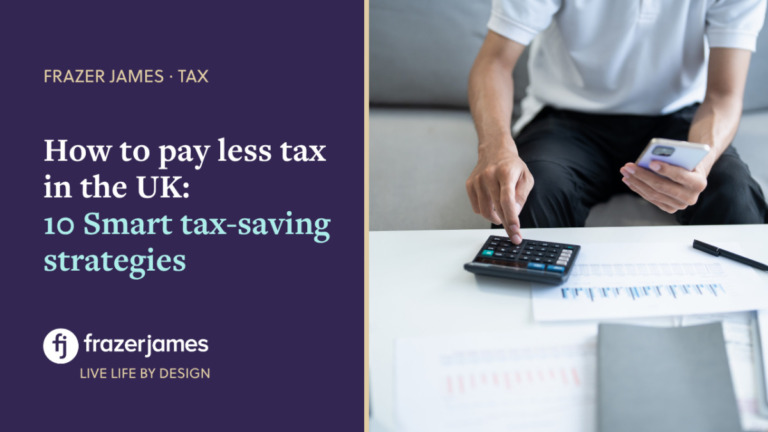 Guide · 11 min readTen ways to reduce your tax billThe reliefs and allowances a higher earner can still use, with worked figures.
 GuideSalary sacrifice changes in 2029What the new National Insurance cap on salary sacrifice means for you, and what it does not touch.
Next · Stage 3Pension allowances
Want to talk this stage through? Financial advice for professionals.
Stage 3 · Pension allowances
How much you can pay in.
You and your employer can pay in up to £60,000 a year, plus unused allowance from the three years before. At the top, the taper cuts that allowance. It applies when threshold income passes £200,000 and adjusted income passes £260,000.

Stage 4 · Bonuses and shares
Pay that arrives in lumps.
A bonus or a block of RSUs is added to your salary and taxed at your top rate. One large vesting can push income into the 60% band for that year. Timing, and what you do with the shares, make a real difference.
 Start here · CalculatorRSU tax calculatorWhat you keep when your RSUs vest, with the income tax and National Insurance on top of your salary.Open the calculator
Read next
 Guide · 18 min readRSUs: a tech employee’s guideHow restricted stock units are taxed in the UK, with a worked vesting example.
 Calculator · opens on this pageBonus tax calculatorHow much of your bonus you actually keep, after income tax and National Insurance.
 Guide · 13 min readBonus sacrifice: how it saves taxSwapping a bonus for a pension contribution, with examples.
 Calculator · opens on this pageShare option tax calculatorWhat you keep when you exercise unapproved options, taxed as earnings on the day.
Next · Stage 5Building the pot
Want to talk this stage through? Financial advice for professionals.
Stage 5 · Building the pot
When work becomes a choice.
The tax you save is only worth it if the money ends up somewhere useful. The question becomes how big the pot needs to be, and when you could stop. Many professionals want the option to stop before State Pension age.
 Start here · CalculatorPension pot calculatorYour pot at the age you take it, how it builds up, and the tax-free cash it could give you.Open the calculator
 Video · 2 minHow we plan retirement with youJames Mackay explains how we help people approaching retirement. He covers working out how much is enough, and turning pensions, savings and investments into an income that lasts.
Read next
 Guide · 15 min readHow to retire early in the UKWorking out your number, the pension access rules, and funding the years before your pension starts.
 Guide · 6 min readHow much do you need to retire?The starting point: spending first, then the pot that supports it.
 Calculator · opens on this pageWhen can I retire?How much is enough, and the earliest age your pensions and investments could support you.
Next · When you want a plan of your ownFinancial advice for professionals
Questions high earners ask.
What is the £100,000 tax trap?

Between £100,000 and £125,140 of adjusted net income, the personal allowance is withdrawn at £1 for every £2. Each extra pound in that band costs 40% tax plus 20% from the lost allowance. The result is a 60% marginal rate, before National Insurance.
How can I get out of the 60% band?
Anything that lowers adjusted net income can help. The usual routes are salary or bonus sacrifice, a personal pension contribution and Gift Aid. A contribution in the band can earn relief at an effective 60%.
How does the Child Benefit charge work?
If either partner has adjusted net income over £60,000, the higher earner repays 1% of the Child Benefit for every £200 above it. By £80,000 the charge equals the full benefit. Pension contributions lower adjusted net income, so they reduce the charge.
Do I get higher rate tax relief on my pension automatically?
Not always. Workplace schemes that take contributions before tax, and salary sacrifice, give full relief straight away. A personal pension adds 20% for you, and you claim the rest through self assessment or by contacting HMRC.
When does the pension annual allowance taper?
When threshold income is over £200,000 and adjusted income is over £260,000. The £60,000 allowance then falls by £1 for every £2 over £260,000, to a minimum of £10,000. Employer contributions count towards adjusted income.
Can I pay in more than the annual allowance?
You may be able to use unused allowance from the three previous tax years, called carry forward. You must have been a member of a registered pension scheme in those years. Contributions above what is available face a tax charge.
How are RSUs taxed in the UK?
Restricted stock units are taxed as earnings when they vest, not when they are granted. Income tax and National Insurance are usually taken through payroll. If you keep the shares, any later growth is a capital gain.
Before you go further
Who this guide is not for.
We would rather say so now than waste your time.
- You want a tax return done and nothing else.That is an accountant’s work, and they should do it.
- You want a product recommendation without a plan behind it.
- You own and run your own company.Our guide on how to pay yourself from a limited company fits you better.
Important information. This page gives information, not personal advice. Tax rules can change, and how they apply depends on your circumstances. The figures are for England in 2026/27.
The value of investments can fall as well as rise, and you may get back less than you invest. A pension is a long-term investment and cannot normally be accessed before age 55, rising to 57 in 2028.
If you want a recommendation for your own position, that is what our financial advice for professionals is for.
Reviewed by

BSc, MLIBF, PETR, Chartered ALIBF · Co-Founder and Chartered Associate
Chris has spent over a decade in financial planning and specialises in research and technical analysis. He checks every figure and calculation on this page before it is published.

EARNING WELL AND LOSING MORE TO TAX THAN YOU NEED TO?
The first conversation is free and there is no obligation. Bring the figures the check gave you and we will talk through your pay, your pension and the allowances you are not using.