 Client Login
  Retirement assessment
  Book a call
  0117 990 2602


Modified on: August 2026
How will the 2027 pension inheritance tax changes affect your family?

Quick Answer: From April 2027, the rules around pensions and inheritance tax are changing, and for many families, the impact will be significant in the UK. Until now, your pension has sat outside your estate, meaning it passes to your family free of inheritance tax. That is about to end. From next April, unused pension funds will be included in your estate and taxed at 40%. For a family with a pension worth £250,000, that is a potential tax bill of £100,000 that simply did not exist before. If you have not yet looked at your retirement and estate plans in light of these changes, now is the time.
David and Margaret had done everything right.
Over thirty years, he built a successful business, made regular pension contributions, and took full advantage of employer contributions wherever he could. When he sold the business in his early sixties, he rolled the proceeds into his pension too. She had inherited her parents’ house and invested carefully. Between them, they had a comfortable retirement: a property worth £700,000, a combined pension of £1,000,000, and around £300,000 in investments and savings.
Their financial plan was built on a sensible assumption: spend the investments first, leave the pension untouched for as long as possible. Pensions sit outside the estate. Why draw them down if you don’t have to?
That assumption is about to become expensive.
From April 2027, unused pension funds will fall within the scope of inheritance tax. For David and Margaret, that means a potential inheritance tax bill of around £400,000 that would not have existed under the old rules. And the closer they get to that date without taking action, the fewer options they have.
This article explains what is changing, why the old approach of spending your pension last may no longer make sense, and how you can reduce your inheritance tax liability.

What is changing about pension inheritance tax from April 2027?
For most of the last decade, pensions have been one of the most tax-efficient assets to leave to your family. Under the current rules, if you die before the age of 75, your pension can usually be passed to beneficiaries completely free of both inheritance tax and income tax. If you die after 75, beneficiaries pay income tax on withdrawals, but the pension itself still sits outside the estate for IHT purposes.
That is now changing.
The proposed rules: what the government has announced
The government’s Autumn Budget 2024 confirmed the intention to bring most unused pension funds within the scope of inheritance tax from April 2027. Since then, the Finance Act 2026 has received Royal Assent (18 March 2026), meaning the change is law. From 6 April 2027, most unused pension funds and pension death benefits will form part of your estate for inheritance tax purposes.
The detail of how pension schemes report and pay the tax is still being finalised, but the change itself is confirmed.
(Source: GOV.UK, Technical Note: Inheritance tax on pensions)
The double taxation problem
For those who die after age 75, the new rules create a compounding problem. The pension will first be subject to inheritance tax at 40% on death. When beneficiaries then withdraw the inherited funds, they pay income tax at their marginal rate, which ranges from 20% for basic-rate taxpayers up to 45% for additional-rate taxpayers.
Here’s how that works in practice:
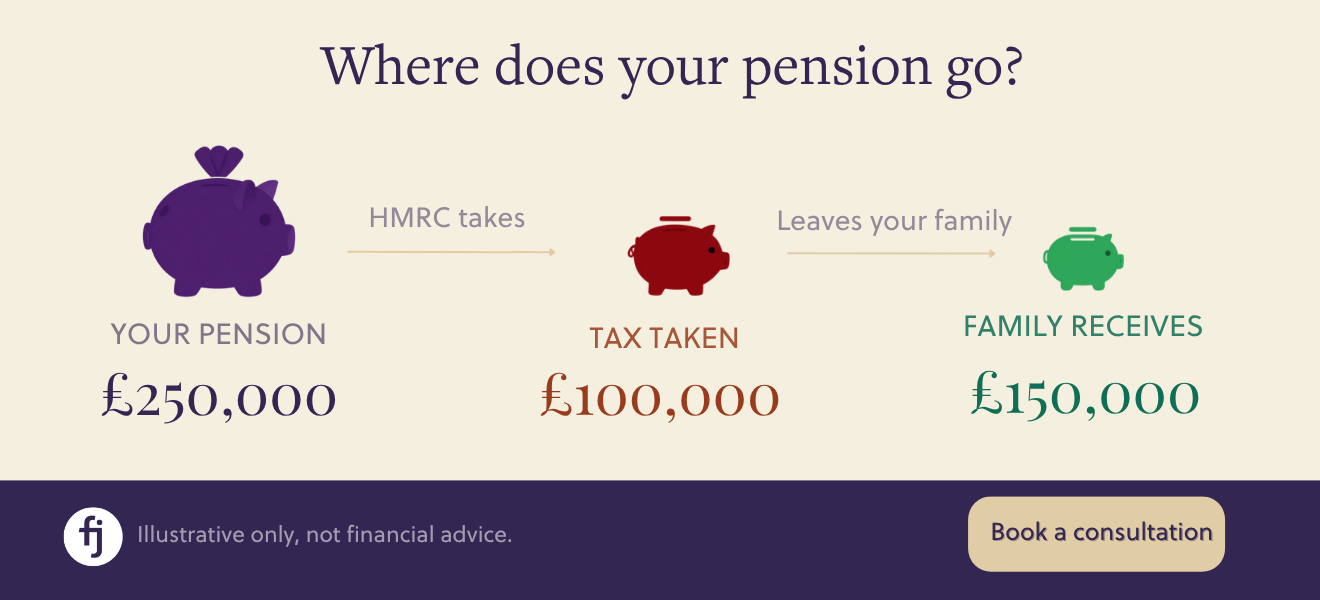
- The pension: £250,000
- IHT at 40% on death: £100,000 (leaving £150,000)
- Income tax at 40% on withdrawal: £60,000
- Your family receives: £90,000 from the original £250,000
- Total tax paid: £160,000
That’s an effective tax rate of 64% in a worst case scenario for a higher-rate-taxpaying beneficiary inheriting a pension from a parent who dies after 75. The government gets more than their children do.
What does this mean for the “spend other assets first” strategy?
Many retirement financial plans have been built around a straightforward principle: draw on investments, savings, and property equity first, and leave the pension intact for as long as possible. The pension grows tax-free inside the wrapper, and on death it passes outside the estate.
Under the new rules, that’s turned upside down. Leaving a large pension untouched is no longer the automatic right answer. For some people, drawing down the pension and spending or gifting those funds during their lifetime can produce a significantly better outcome for their family.
Before vs. after April 2027 at a glance:
| Before April 2027 | From April 2027 (proposed) | |
| Pension on death (before 75) | Outside estate, no IHT | Inside estate, up to 40% IHT |
| Pension on death (after 75) | Outside estate, income tax on withdrawals | IHT on death & income tax on withdrawal |
| Optimal drawdown strategy | Spend other assets first | May need to draw pension first and gift surplus |
A worked example:
| Asset | Value | IHT position from 2027 |
| Property | £700,000 | In estate |
| Investments / cash | £300,000 | In estate |
| Pension | £600,000 | In estate from 2027 |
| Total estate | £1,600,000 | |
| Couple’s allowance* | £1,000,000 | |
| Taxable estate | £600,000 | |
| Potential IHT bill @ 40% | £240,000 | Previously: £0 |
*Two Nil Rate Bands at £325,000 each and two Residence Nil Rate Bands at £175,000 each, totalling £1,000,000 for a married couple or civil partnership.
Before April 2027, David and Margaret would have faced no inheritance tax at all. Their pension sat outside the estate, and everything else fell within the couple’s combined allowance. From 2027, that same estate carries a £240,000 tax bill, created entirely by a rule change they may never have heard about.
Should you take your pension as a lump sum or beneficiary drawdown? (Why it matters more than ever)
Most people have never been asked how they want their pension paid out when they die. The default answer built into most pension policies is a lump sum. It is also, in most cases, the less tax-efficient option.
When you die, your pension can typically pass to your beneficiaries in one of two ways:
- Lump sum death benefit: The full pension fund is paid out as a single cash payment.
- Beneficiary drawdown: The pension stays invested. Your beneficiaries draw from it over time, paying tax only on what they actually withdraw, not on the whole pot at once.
The difference in tax treatment between the two is significant, and it changes depending on whether you die before or after age 75.
| Lump sum | Beneficiary drawdown | |
| Before 75 | Beneficiary can receive up to £1,073,100 tax-free. Anything above that is taxed at their marginal rate. The funds then form part of their estate. | Beneficiary receives the full pension value tax-free, with no upper limit. Funds stay outside their estate for as long as they remain in the pension. |
| After 75 | Beneficiary pays income tax on the entire pension value at their marginal rate, in the year it is received. The funds then form part of their estate. | Beneficiary pays income tax only on what they actually withdraw each year. The rest stays invested and outside their estate until drawn. |
The practical difference is significant. A beneficiary receiving a £500,000 lump sum after age 75 pays income tax on the entire amount in one year, almost certainly at the higher or additional rate. A beneficiary receiving the same pension through drawdown can spread withdrawals across many years, staying within lower tax bands and keeping the rest outside their estate.
From April 2027, any pension funds left unspent will also be subject to inheritance tax on the beneficiary’s death. This compounds the advantage of drawdown further, keeping funds in the pension wrapper, drawing gradually, and reducing the estate over time rather than crystallising a large taxable sum at once.
Most people’s pensions are set up with lump sum death benefits. Many have never reviewed this. Switching to beneficiary drawdown, where available, is one of the simplest and highest-impact changes a pension holder can make, and it costs nothing to do.
Are you making the most of your existing inheritance tax allowances?
Before looking at what changes with the pension rules, it’s worth checking whether the existing allowances are being used properly. Many families are not.
The allowances most couples are not fully using
A married couple or civil partnership can potentially pass up to £1,000,000 to the next generation before inheritance tax applies, if the estate is structured correctly. This is made up of:
- Nil Rate Band (NRB): The amount each person can leave before IHT applies, currently £325,000 each
- Residence Nil Rate Band (RNRB); An additional allowance of up to £175,000 each, available when a main residence passes to direct descendants
- Spouse exemption: Assets passed between spouses on death are free of IHT entirely, and unused allowances transfer to the surviving spouse
(Source: GOV.UK, Inheritance Tax thresholds and rates)
The Residence Nil Rate Band (RNRB) taper catches people out
The residence nil rate band gradually reduces on estates above £2 million, meaning the more your estate exceeds that threshold, the less of this allowance you can use. It is reduced by £1 for every £2 over the threshold. For an estate worth £2.2 million, you lose £100,000 of the allowance. Once your estate exceeds £2.35 million, the RNRB disappears entirely.
If you own a home in London or the South East, you may be closer to that threshold than you realise. And from 2027, with pensions counted in the estate, many people who assumed they were comfortably under the limit may find themselves over it.
(Source: GOV.UK, Inheritance Tax thresholds and rates)
Gifting: the strategy most families underuse
Structured gifting is one of the most effective inheritance tax tools available, and one of the least used. The rules allow for:
- Annual gifting exemption: £3,000 per person per year, with the ability to carry forward one unused year
- Small gifts exemption: £250 per person, to as many individuals as you like, with no limit on recipients
- Gifts from surplus income: Potentially unlimited, if they are made regularly and do not affect your standard of living
- Potentially exempt transfers (PETs): Larger gifts that fall outside the estate after seven years
(Source: GOV.UK, How Inheritance Tax works: thresholds, rules and allowances)
A couple gifting £6,000 a year between them for ten years removes £60,000 from their estate before any investment growth is factored in. Do that for twenty years and it’s £120,000. That’s not a loophole. It’s the rules working as designed.
The seven-year rule applies to larger gifts, anything above the annual exemptions. If you make a gift and survive seven years from the date you made it, that gift falls outside your estate entirely and no inheritance tax is due on it. If you die within those seven years, the gift may still be taxed, but at a reducing rate the further you are from the date it was made. This is called taper relief.
Is it worth paying income tax on pension withdrawals to reduce an inheritance tax bill?
This is the question that catches most people off guard. Paying tax deliberately feels counterintuitive. But the math is worth checking.
When drawing your pension early makes financial sense
Under the new rules, a pension left untouched until death could face inheritance tax at 40% before a single pound reaches your family. If the beneficiary is also a higher-rate taxpayer, income tax on top compounds that significantly.
Compare that with drawing a pension during your lifetime.
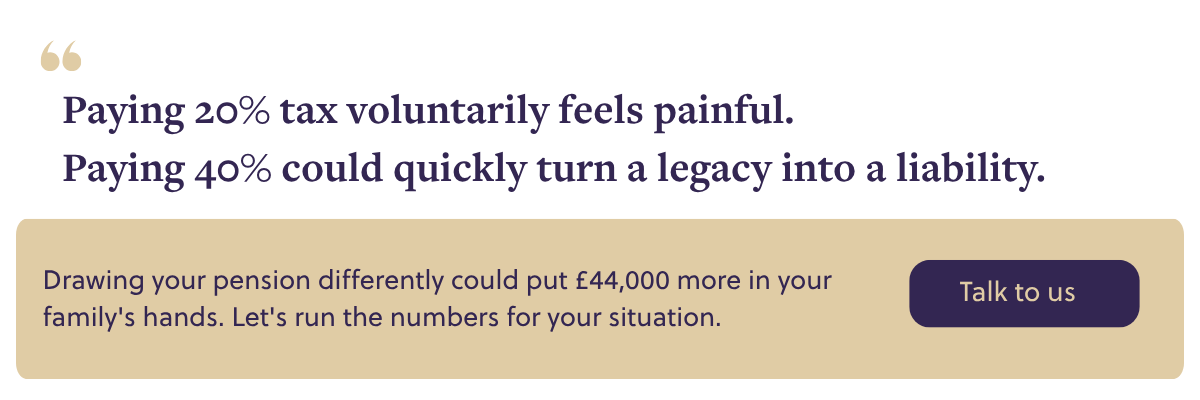
Here’s a side-by-side comparison. We assume a basic-rate taxpayer in retirement (20% income tax) and a higher-rate beneficiary (40% income tax on withdrawals).
Scenario A: Leave the £100,000 pension untouched (die after 75)
-
- Pension fund: £100,000
- IHT at 40%: £40,000
- Remaining to beneficiary: £60,000
- Beneficiary pays 40% income tax on withdrawal: £24,000
- Family receives: £36,000
Scenario B: Draw the pension and gift over five years (die after 7 years)
-
- Draw £20,000 per year for five years
- Pay 20% income tax on each withdrawal: £4,000 per year
- Gift net £16,000 per year as a PET
- Survive seven years from first gift
- Family receives: £80,000 (the full gifted amount)
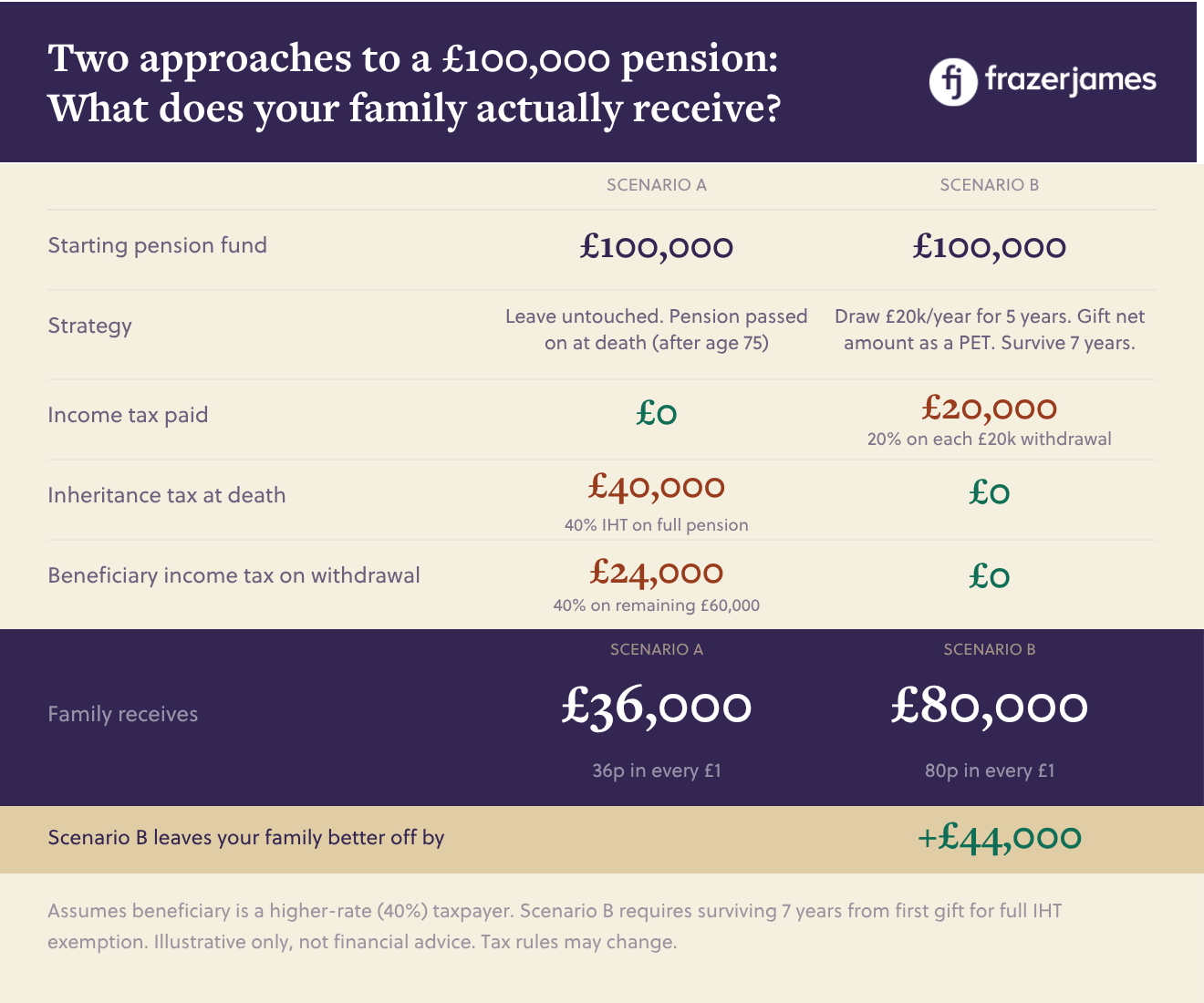
In this example, drawing the pension and paying income tax deliberately puts nearly £44,000 more in your family’s pocket than leaving the pension untouched. It also depends on your health, your tax band, and the size of your estate, but for many retirees, the comparison changes the decision entirely.
Can you take tax-free cash from your pension to reduce your inheritance tax bill?
Most people with a pension are entitled to take 25% of their fund as a tax-free lump sum, up to a current maximum of £268,275.
Taking the tax-free lump sum does not change the inheritance tax position of the remaining pension fund. What matters is what you do with the cash afterwards. Left in a bank account, it remains part of your estate. Deployed into ISAs, gifted systematically, or used as part of a trust structure, it can start working to reduce the eventual bill.
(Source: GOV.UK, Tax on your private pension contributions)
How does this interact with your income in retirement
Aside from the tax-free cash, any money you withdraw from your pension is treated as taxable income in the year you take it, in the same way a salary would be. Drawing heavily in a single year could push you into a higher tax band or reduce other allowances. A phased withdrawal strategy, spread across multiple tax years, is usually more efficient than a single large sum.
Thinking about whether to draw your pension differently? Talk to our team about retirement income planning.
What are the most effective inheritance tax planning strategies before 2027?
Good inheritance tax planning is rarely about one clever move. It is about combining several strategies over a long enough period that each one has time to do its job. The good news is that the most effective plans rarely require dramatic action or giving up control of your money.
Trusts: moving assets outside the estate while staying in control
A trust allows you to move assets outside your estate while maintaining a degree of control over how and when they are distributed. Here’s how the main types word in practice:
- Discretionary trusts: Assets are held for a class of beneficiaries (e.g., ‘all grandchildren’). Trustees decide who gets what and when. Useful where beneficiaries are young or you want to retain flexibility.
- Loan trusts: You lend a sum to the trust (say, £100,000). The loan is repayable on demand, so it sits outside your estate. The trust invests the money and grows it for beneficiaries.
- Discounted gift trusts: You put assets into a trust but retain the right to a fixed income stream. The ‘discount’ on the gift value (the amount HMRC agrees is immediately outside your estate) is calculated based on your age and health.
Assets held in certain trusts are generally outside the estate after seven years, subject to certain gifting rules. Trusts come with their own tax considerations, including a ten-year anniversary charge, but for families with significant assets, they form a valuable part of a broader plan.
Spending assets in a different order
The order in which you draw on different assets in retirement can significantly impact the estate value left for your beneficiaries. Under the old rules, drawing pensions last made sense. Under the proposed rules, drawing pensions earlier and preserving ISAs and investments longer may produce a better outcome for your family.
There is no universal answer. The right sequence depends on your income tax position, estate size, health, and the level of flexibility you desire.
Whole of life insurance
One practical problem with a large inheritance tax bill is timing. Inheritance tax is generally due by the end of the sixth month after the month of death. In many cases, some or all of the tax must be paid before probate is granted, creating a situation where the estate is asset-rich but cash-poor. A whole of life policy written in trust provides a lump sum specifically to cover that liability. It sits outside the estate, so the payout is not itself subject to IHT. It does not reduce the tax bill, but it means your family can pay it without being forced to sell the house.
For a couple with a £200,000 expected IHT liability:
- At age 65: A joint life, second death policy might cost roughly £150–£250 per month.
- At age 75: That same policy could cost £400–£700 per month or more, assuming standard health.
Premiums vary significantly based on health, lifestyle, smoker status, and insurer. These figures are illustrative only.
Intergenerational planning: helping family earlier
For many affluent retirees, the goal is not simply to reduce inheritance tax. It’s to help children and grandchildren at the point where financial support actually makes a difference: with a deposit, school fees, or starting a business.
Structured early gifting achieves both. A couple like David and Margaret, drawing £20,000 a year from the pension and gifting the surplus to their children, gradually reduces the estate while supporting their family at a point where it actually changes things, not twenty years from now when their children are in their sixties.

Key takeaways
- The rules are already confirmed: Finance Act 2026 has received Royal Assent. From 6 April 2027, unused pension funds are subject to inheritance tax at 40%. The window to plan is narrowing.
- The old strategy will cost your family: The “spend everything else first and leave the pension untouched” approach may now cost your family more than drawing and gifting the proceeds during your lifetime.
- Double taxation is a real risk: For those who die after 75, pension funds could face IHT on death and income tax on withdrawal. A £250,000 pension can become just £90,000 by the time it reaches a higher-rate beneficiary.
- Use the allowances you already have: Many couples aren’t using the £1m combined allowance, the £3,000 annual gifting exemption, or the surplus income gifting rules, all of which are available right now.
- The best plans start early: A couple gifting £6,000 a year for ten years removes £60,000 from their estate. Do it for twenty years, and it’s £120,000. Small, consistent actions beat last-minute panic.
Talk to Frazer James
If you are approaching retirement with a significant pension and an estate that may be affected by the proposed 2027 changes, the window to plan effectively is narrowing. Structured gifting, phased drawdown, and trust planning all require time to do their job properly.
We work with affluent retirees across Bristol and the UK to build inheritance tax plans that hold up to scrutiny and give families real choices.
Book an initial consultation or call us on 0117 990 2602.
This article is for general information purposes only and does not constitute financial or tax advice. Tax rules and their application depend on individual circumstances. The pension inheritance tax changes described reflect legislation current at the time of writing. Independent professional advice should be sought before acting on anything in this article. Frazer James Financial Advisers is authorised and regulated by the Financial Conduct Authority.
About The Author

Frequently Asked Questions About the 2027 Pension Inheritance Tax in the UK
Will these changes definitely go ahead in April 2027?

Does my pension automatically become part of my estate from 2027?
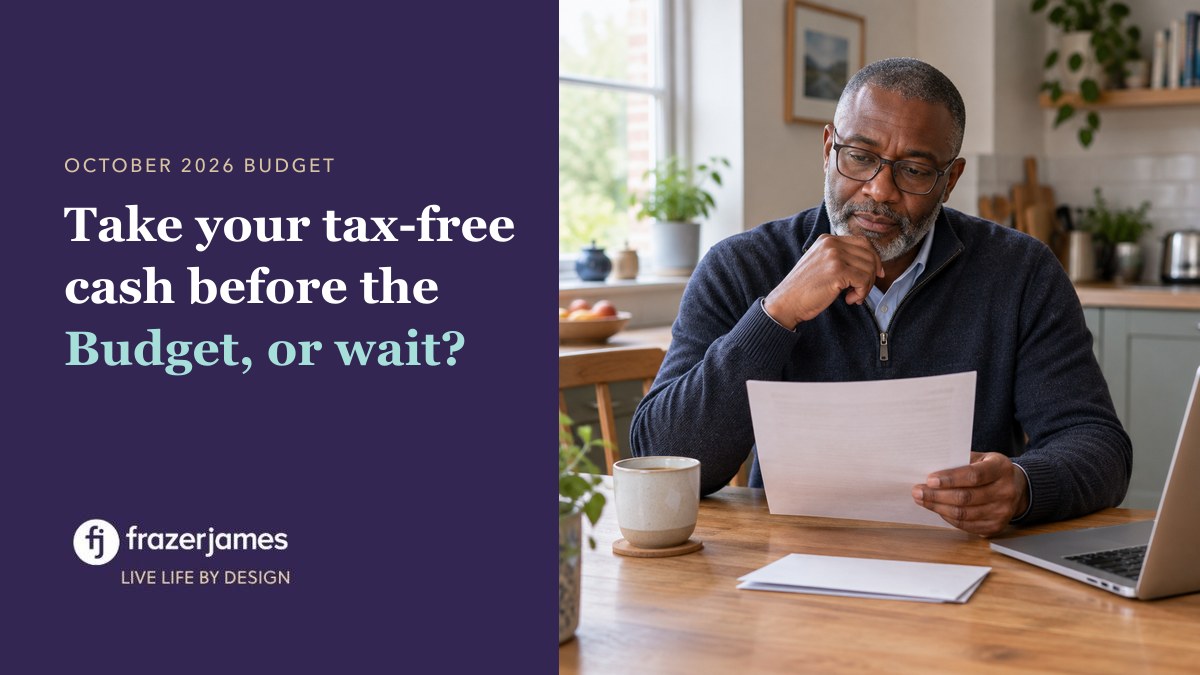
Should I take my tax-free cash now before the rules change?
What if I leave everything to my spouse? Do the rules still apply?
Is there a minimum estate size where this becomes worth thinking about?
What is the best first step?
Related news








Get in touch
Schedule a free consultation with one of our financial advisers, or give us call.
0117 990 2602